
Ebook Personal Stereo (Object Lessons)
Reviewing, once again, will offer you something new. Something that you have no idea then revealed to be well understood with the e-book Personal Stereo (Object Lessons) notification. Some knowledge or session that re obtained from checking out publications is vast. More publications Personal Stereo (Object Lessons) you read, even more understanding you get, and also more chances to consistently enjoy reviewing e-books. Due to this reason, reviewing book should be started from earlier. It is as what you could obtain from guide Personal Stereo (Object Lessons)
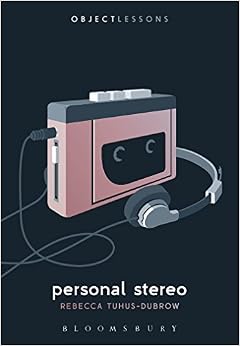
Personal Stereo (Object Lessons)

Ebook Personal Stereo (Object Lessons)
Checking out is a hobby to open up the expertise home windows. Besides, it could provide the motivation and spirit to face this life. By this way, concomitant with the modern technology advancement, many business serve the e-book or publication in soft file. The system of this book naturally will be much easier. No worry to neglect bringing the book. You can open up the tool and also obtain guide by online.
Awaiting launching this book is regardless of. It will certainly not make you really feel burnt out as what you will really feel when awaiting someone. It will certainly have lots of curiosity of how this book is expected to be. When waiting a much-loved publication to read, one sensation that frequently will occur wonders. So, what make you really feel so curious in this Personal Stereo (Object Lessons)
Why need to be reading Personal Stereo (Object Lessons) Again, it will depend upon just how you really feel as well as think about it. It is definitely that of the perk to take when reading this Personal Stereo (Object Lessons); you can take more lessons straight. Also you have actually not undertaken it in your life; you could get the experience by reading Personal Stereo (Object Lessons) As well as now, we will introduce you with the online publication Personal Stereo (Object Lessons) in this site.
Based on the Personal Stereo (Object Lessons) information that our company offer, you might not be so confused to be below and to be member. Get currently the soft documents of this book Personal Stereo (Object Lessons) as well as wait to be your own. You conserving could lead you to stimulate the simplicity of you in reading this book Personal Stereo (Object Lessons) Also this is forms of soft file. You can actually make better chance to get this Personal Stereo (Object Lessons) as the advised book to read.
Review
"A compelling and expertly researched study of the Sony Walkman.†– New Books Network"An honest & deft entry in [Bloomsbury's] Object Lessons series." – Music Book Review"[A] careful, astute study." – The Wire"In 2017, having music pumped into your ears through headphones while existing in public is a thoroughly normal thing to do. But as Rebecca Tuhus-Dubrow outlines in the delightful Personal Stereo, being able to do so is a relatively recent development ... Her thoughtfulness imbues this chronicle of a once-modern, now-obsolete device with a mindfulness that isn’t often seen in writing about technology." - Pitchfork (named one of Pitchfork's favorite books of 2017)"Tuhus-Dubrow illuminates a web of stories connected to the Walkman, her references as ubiquitous as its users ... After finishing Personal Stereo, I found myself wondering about the secret lives of every object around me, as if each device were whispering, “Oh, I am much so more than meets the eyeâ€... Tuhus-Dubrow is a master researcher and synthesizer. It would appear that she has left no Walkman-related stone unturned ... Tuhus-Dubrow [is] an elegant, engaging storyteller who unpacks complex social and political concepts with clarity and panache ... Personal Stereo is a joy to read." – Los Angeles Review of Books"Personal Stereo is loving, wise, and exuberant, a moving meditation on nostalgia and obsolescence. Rebecca Tuhus-Dubrow writes as beautifully about Georg Simmel and Allan Bloom as she does about Jane Fonda and Metallica. Now I understand why I still own the taxicab-yellow Walkman my grandmother gave me in 1988." - Nathaniel Rich, author of Odds Against Tomorrow"Rebecca Tuhus-Dubrow’s affectionate history traces the Walkman out of an electronics workshop in bombed-out postwar Tokyo to global icon of solitary, un-networked bliss." - Sasha Issenberg, author of The Sushi Economy"Personal Stereo explores the development of the Walkman, its impact on our culture, and its legacy, not only highlighting its time as a status symbol but discussing its surprising resurgence today as part of the analog revolution. Plus Tuhus-Dubrow shares her own personal memories of Walkman ownership, offering a nice intimate touch to a book full of fun pop-culture trivia and anecdotes. Perhaps the best part of Personal Stereo was seeing parallels between reactions to the Walkman and recent complaints about smartphone ownership. (Particularly regarding selfishness and isolation.) Observing these cyclical historical undercurrents, large and small, is both entertaining and engaging. You might have preferred your iPod, but there’s no doubt the Walkman was worthy of a tribute and brief history like this." - San Francisco Book Review"Tuhus-Dubrow’s valuable historical and pop cultural analysis provides a genuine yet evenhanded portrait of all that has been loved and lost in the way the personal stereo has impacted public spaces and social communication. Personal Stereo is a clear-eyed study on the way this technology continues to disrupt, for better and for worse." - PopMatters"A fascinating and informative, yet also nostalgic, look at the rise and fall of the personal stereo ... The author has worked hard to make this book readable, accessible and thorough in its enquiry ... Tuhus-Dubrow manages to keep the feel of the book light and engaging. It has enough information in to feel academically researched, yet is written in an easily accessible fashion ... Although I enjoyed the final 'Nostalgia' section, I think anybody with an interest in design, business, technology, or social and cultural history, will find the first section, 'Novelty', an interesting delve into the development of Sony as a company, its founders, and its famous Walkman. Five stars." - The Bookbag“Personal Stereo accomplishes a lot in the short time it takes to read. It reminds readers (or informs them) of just how revolutionary the Walkman experience was, and how much it anticipated today's conversations about technology and personal space.†- The Current
Read more
Book Description
In this cultural history Rebecca Tuhus-Dubrow investigates the walkman's influence on public space, our relationship to electronic personal devices, and the fears and exhilaration induced by new technologies (as well as the nostalgia attached to old ones).
Read more
See all Editorial Reviews
Product details
Series: Object Lessons
Paperback: 152 pages
Publisher: Bloomsbury Academic (September 7, 2017)
Language: English
ISBN-10: 9781501322815
ISBN-13: 978-1501322815
ASIN: 1501322818
Product Dimensions:
4.9 x 0.5 x 6.5 inches
Shipping Weight: 3.5 ounces (View shipping rates and policies)
Average Customer Review:
4.3 out of 5 stars
7 customer reviews
Amazon Best Sellers Rank:
#794,987 in Books (See Top 100 in Books)
I love music almost as much as reading so when I saw this book I knew it was a must-read (plus the cover is fabulous). I had not encountered the Object Lessons series previously, but after reading this one I plan to seek out more of them. Personal Stereo is a quick and fascinating read that covers both the history of the Walkman and its effects on society. The Walkman’s debut occurred when I was young so I do not remember either the excitement it generated nor the consternation about its potential negative impact on society. Looking back from a time when iPhones exist, at times it was almost comical to read some of the concerns that critics voiced about the Walkman.Personal Stereo thankfully begins long before the invention of the Walkman with a history of Sony and its founders, Masaru Ibuka and Akio Morita. I found this section incredibly engaging and loved learning that Sony began with a staff of eight crammed into a small office in a bombed downtown Tokyo department store in 1945. The company’s initial name was Tokyo Telecommunications Research and was later changed to Sony, derived from the Latin word for sound and a play on the English word “sonnyâ€, a slang term meaning young boy that was common in Japan at the time. The company first began upgrading radios and then eventually produced the first tape recorder available in Japan. Next, Sony produced the transistor radio eventually earning one of its researchers the Nobel Prize in Physics for his work on the invention. As the saying goes “and the rest is historyâ€.The author also focuses on the shift from only being able to listen to music live to having music available on the radio and later records, cassettes, CDs and finally MP3 players. Again, this was not something I have ever thought twice about and was somewhat enthralled that critics could not “bear to hear a remarkably life-like human voice issuing from a box.†Music suddenly became something in the background frequently instead of the focal point. As I frequently use music to pass the time on car trips, while folding laundry and cooking dinner, and as something to just relax my mind, I was completely intrigued with the concept that recorded music caused such an uproar initially. What a sad world we would live in without easy access to music.While there are several genesis stories for the creation of the Walkman, Sony employees generally felt the Walkman would be a failure. A tape recorder that was not used to tape something seemed absurd, and the fact that no invention occurred but instead Sony teams working together merged existing technologies (and actually removed the taping function) seemed a crazy idea for most people in the field at the time. Clearly, as with many new products, the Walkman was not only an immediate success but changed the way people listened to music going forward.The inclusion of numerous photos and newspaper advertisements add significant value to the book. I loved looking at the old Walkman ads and the focus on taking sound with you. There is so much more to this book, and it is well worth the read. I clearly loved Personal Stereo and highly recommend it. Thanks so much to Bloomsbury Academic and NetGalley for the chance to read this ARC in exchange for an honest review.
Personal Stereo is an interesting little book, though not what I thought it would be. It started out as I expected, by describing the origin and history of the Walkman. (The origin of the concept is actually quite murky, with multiple people claiming to be the first to conceive of a personal cassette player). I was surprised to learn that the first portable cassette units were actually recorders, designed for reporters and court stenographers.The tone of the book turns unexpectedly serious during the "Norm" chapter. Some social critics at the time apparently believed that the Walkman would bring about the end of civilized society. This section of the book gets unwieldy, as the decline of etiquette, hearing loss, people getting hit by trains, the rise of the yuppie, music piracy, and even masturbation are all topics of discussion.The third chapter is entitled "Nostalgia," and the tone lightens again. Children of the 80s do feel nostalgic about the Walkman, as evidenced by the spike in prices for a used one after Guardians of the Galaxy was released.This was a quick read, and will bring back fond memories for those of us who grew up with foamy headphones.
Whatever happenedTo Tuesday and so slowGoing down to the old mine with aTransistor radio“Brown Eyed Girlâ€, Van MorrisonPersonal StereoPersonal Stereo by Rebecca Tuhus-Dubrow is a study of what is now one of the most common devices seen in society. Tuhus-Dubrow is a Contributing Editor at Dissent. She was previously a contributing writer for the Boston Globe’s Ideas section, a columnist for the urban affairs website Next City, and a Journalism and Media Fellow at the UCLA Institute of the Environment and Sustainability.Bloomsbury Academic Press has released a growing series of object lessons over the last few years. These are ordinary items that usually don’t get a second thought. My introduction to the series was Hood a book covering hoods from executioners to hoodies. In this edition, the book took me back to my discovery of music. I remember listening to music, football, and AM music on a transistor radio with a single ear bud. The mono earphone jack allowed the listener keep one ear on the music and the other on the world around them.The Walkman brought a change. It was stereo and it let the listener chose what he or she listened to. Long before Napster and Pirate Bay people pirated music by copying vinyl records to cassette and trading with friends. This later evolved into the 80s mixed tapes which were given to special friends. Cassette tapes were the MP3s, or rather the removable storage of the day; stereos even had a side by side cassette players to copy music from one tape to another. Music became personal and portable. The Walkman offered another layer of personalization. You could listen to your music anywhere without disturbing others around you. Stereo headphones completed your privacy as you could block out the world around you with tinny sounding headphone speakers covered in a removable foam sock set over your ear.Today, this is all too common with iPods and now with phones taking the place of the Walkman. Just glance around a commuter train or a bus and see how many people have earbuds in their ears. Previously, when trapped in a window seat a simple “Excuse me†was enough to signal to the person in the aisle seat that it was your stop. Today usually a tap on the shoulder is needed to bring that person back into the world.Personal Stereo is the history of a device that had no original market (a cassette player that did not record) yet caught on and changed the way we listen to music. The original Sony Walkman was a hefty 14 ounces (compared to 1.1 ounces of an iPod Nano) but was so portable people used them when running. Today, nearly a pound of extra weight would be scoffed at by most runners. Sony wasn’t alone with its portable cassette player. Soon there were many knockoffs on the market but none better than the original. Walkman, like Xerox, was a product name that entered our vocabulary not only as an original but also as any comparable item. Your photocopy was called a Xerox no matter whose machine made it. Any personal portable stereo was called a “Walkman.â€Sony wasn’t alone with its portable cassette player. Soon there were many knockoffs on the market but none better than the original. Walkman, like Xerox, was a product name that entered our vocabulary not only as an original but also as any comparable item. Your photocopy was called a Xerox no matter whose machine made it. Any personal portable stereo was called a “Walkman.â€Tuhus-Dubrow takes the reader through the rise and fall of Sony and the era of cassette tapes. A nice contemporary cultural history of something that has become solidly entrenched in our culture. As I am typing this I am listening to Karla Bonoff on my iPhone through Bluetooth headphones. The same artist I would have been listening to doing this at a typewriter with a Walkman thirty-five years ago. Times change, but Personal Stereo shows us that behavior only evolves.Available September 7, 2017
Personal Stereo (Object Lessons) PDF
Personal Stereo (Object Lessons) EPub
Personal Stereo (Object Lessons) Doc
Personal Stereo (Object Lessons) iBooks
Personal Stereo (Object Lessons) rtf
Personal Stereo (Object Lessons) Mobipocket
Personal Stereo (Object Lessons) Kindle

Tidak ada komentar:
Posting Komentar