
PDF Ebook Molecular Cancer Therapeutics: Strategies for Drug Discovery and Development
In fitting the brand-new updated book launched, we pertain to you. We are the on-line site that always provides a really terrific means, terrific term, and also wonderful checklists of the collections publications from lots of nations. Schedule as a fashion to spread out the news and information about the life, social, sciences, faiths, lots of others holds an essential rule. Publication could not as the style when they are out of date, they will function as absolutely nothing.
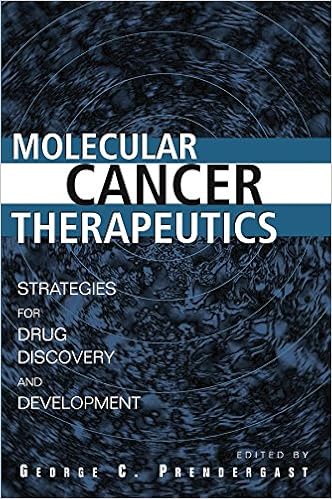
Molecular Cancer Therapeutics: Strategies for Drug Discovery and Development

PDF Ebook Molecular Cancer Therapeutics: Strategies for Drug Discovery and Development
If you are still back to back to discover the ideal publication to review, we have provided a wonderful publication as prospects. Molecular Cancer Therapeutics: Strategies For Drug Discovery And Development as one of the referred books in this short article can be appreciated now. It is not only regarding the title that is extremely fascinating as well as brings in individuals to come reading it. As well as why we provide this book to you is that it will certainly be your friend along your leisure time.
various sight. Yeah, this publication overcomes a new thing that will certainly not just influence, however likewise improve lesson and also experience. Having this Molecular Cancer Therapeutics: Strategies For Drug Discovery And Development, also as soft documents, will show that you have joint to be one of the hundreds readers worldwide. Yeah, you're one part of the fantastic people that like this publication.
This book will certainly reveal you the recent book that can be gotten in some places. Nonetheless, the inspiring publication will certainly be far more developed. However this Molecular Cancer Therapeutics: Strategies For Drug Discovery And Development, it will reveal you current point that you would like to know. Reviewing book as one of the activities in your vacations is extremely wise. Not everyone will certainly have willing to do it. So, when you are person that like this publication to read, you need to enjoy the time analysis and finishing this publication.
When somebody should recognize something, this publication will probably aid to discover the answer. The reason that analysis Molecular Cancer Therapeutics: Strategies For Drug Discovery And Development is a must is that it will certainly gives you a brand-new way or better means. When someone tries to make an initiative to be success in certain thing, it will certainly aid you to understand just how the thing will be. Well, the simple way is that you might get included straight to act in your life after reading this publication as one of your life sources.
From The New England Journal of Medicine
In this excellent and timely book, George Prendergast has created a primer for academically trained laboratory scientists about the challenges of developing modern drugs. The growing expectation among the public that scientific advances in cancer research should be applied to clinical medicine as rapidly as possible has made it essential for even the most basic-science-oriented researcher to gain some familiarity with how drugs are discovered and developed. Furthermore, the landscape of modern biomedical research is evolving, both in its innate structure and in the types of personnel and institutions that are involved. New treatments are now rationally designed to target specific aspects of malignant cells, on the basis of our growing molecular understanding of cancer biology. In addition, basic scientific observations that are pharmaceutically relevant are increasingly being made within large research universities and in a growing legion (or shrinking, depending on the economic cycle) of small biotechnology companies. Many of these start-up commercial initiatives are seeded by academic discoveries. In contrast, the resource-intensive process of drug development is traditionally guided by large pharmaceutical companies. This new partnership requires constructive collaboration between experts in basic science and drug development to produce the optimal division of labor. For the young, academically trained scientist, approaching the complex interface between academics and industry for the first time can be bewildering. Historically, expertise is achieved only after many years of hands-on experience, and comprehensive, well-written reference works in this area are notably lacking. This book ambitiously and successfully fills the void, thereby easing the novice's introduction to the rapidly changing field. The astute recognition of the need for this type of textbook probably derives from the editor's own personal experience as a leader in cancer research. The book consists of chapters ranging from the general to the specific, which as a whole provide a comprehensive overview of the discovery of anticancer drugs and early preclinical development. By design, the emphasis is on small-molecule therapies, in which the greatest knowledge gap is perceived to exist. A fundamental theme that resonates throughout the book is that targeted therapies are being driven by our growing understanding of cancer genetics. This emphasis serves as a clarion call for implementation of new paradigms and approaches to preclinical and clinical drug development. Excellent general chapters discuss the promise of new molecularly targeted agents, validation of molecular targets, high-throughput screening for lead compounds, animal models, pharmacokinetics and pharmacodynamics, and clinical drug development. Also excellent is the discussion about intellectual property and the economics of drug development, often mysterious to scientists and clinicians alike. Interspersed with these general topics are highly detailed chapters about specific types of technology that are fundamental to the discovery and development of targeted drugs, such as DNA-and tissue-microarray applications, and about new techniques, such as RNA interference to silence gene expression selectively. Also included are methods with as-yet-unrealized potential, such as protein transduction, which involves the cellular delivery of large macromolecules through receptor-independent pathways. Although the selection of specific topics directly reflects the editor's bias, the rational design underlying the entire work is clearly evident. The contributors are a diverse group of academic and industry specialists who, for the most part, are well suited to the task, although the quality of individual chapters varies. Most of the shortcomings are minor. For example, the inclusion of an entire chapter on transgenic animal models may be justified by the emphasis on molecular targets, but the total contribution of such models to drug development to date is limited compared with that of traditional xenograft studies in nude mice. Also valuable is the conceptual discussion of pharmacokinetics and toxicology, but the systematic listing of toxic effects of conventional chemotherapy by class of agents is less so. Likewise, the general discussion of methods of high-throughput screening conveys the impressive power of miniaturization, but it could be better simplified for a general audience. Nonetheless, the need for a reference work such as this has never been greater. As Prendergast states, academic laboratories and small biotechnology companies increasingly provide the "R" in pharmaceutical R&D (research and development), whereas the "D" is supplied by large pharmaceutical companies. By extension, this little book represents the ever-so-important "and" that links research and development together in a logical and thoughtful manner. As such, it is a detailed reference for experts on both sides of the divide, providing a common framework for discussion and collaboration. It is a valuable resource for scientists and clinicians alike who are interested in modern approaches to the development of anticancer therapeutics. Chris H. Takimoto, M.D., Ph.D.Copyright © 2005 Massachusetts Medical Society. All rights reserved. The New England Journal of Medicine is a registered trademark of the MMS.
Read more
Review
"…this little book represents the ever-so-important 'and' that links research and development together in a logical and thoughtful manner...a valuable resource for scientists and clinicians alike…" (New England Journal of Medicine, January 27, 2005) "...an excellent publication.… I recommended it for libraries...those involved in cancer research...those who teach pharmacy and medical students about drugs used in the treatment of cancer." (The Annals of Pharmacotherapy, December 2004) "…provides an up-to-date overview of the different phases of drug discovery and preclinical development of experimental cancer principles.” (Drug Discovery & Development, September 2004) "…a most informative book, discussing the important evolution in the field of cancer therapeutics…" (American Journal of Therapeutics, July/August 2004)
Read more
See all Editorial Reviews
Product details
Hardcover: 351 pages
Publisher: Wiley-Liss; 1 edition (April 2, 2004)
Language: English
ISBN-10: 9780471432029
ISBN-13: 978-0471432029
ASIN: 0471432024
Product Dimensions:
7.3 x 0.9 x 10.2 inches
Shipping Weight: 1.8 pounds (View shipping rates and policies)
Average Customer Review:
Be the first to review this item
Amazon Best Sellers Rank:
#7,064,763 in Books (See Top 100 in Books)
Molecular Cancer Therapeutics: Strategies for Drug Discovery and Development PDF
Molecular Cancer Therapeutics: Strategies for Drug Discovery and Development EPub
Molecular Cancer Therapeutics: Strategies for Drug Discovery and Development Doc
Molecular Cancer Therapeutics: Strategies for Drug Discovery and Development iBooks
Molecular Cancer Therapeutics: Strategies for Drug Discovery and Development rtf
Molecular Cancer Therapeutics: Strategies for Drug Discovery and Development Mobipocket
Molecular Cancer Therapeutics: Strategies for Drug Discovery and Development Kindle

Tidak ada komentar:
Posting Komentar