
Ebook The Color of Compromise: The Truth about the American Church’s Complicity in Racism, by Jemar Tisby
Quantities of the book collections that we offer in the lists in this web sites are really many. Numerous titles, from variant topics and styles are produced by variations writers. Furthermore, they are also published from various authors in the world. So, you might not only discover The Color Of Compromise: The Truth About The American Church’s Complicity In Racism, By Jemar Tisby in this site. Several many publications can be your forever buddies begin with now.
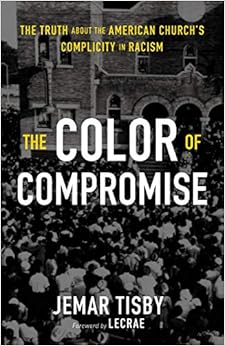
The Color of Compromise: The Truth about the American Church’s Complicity in Racism, by Jemar Tisby

Ebook The Color of Compromise: The Truth about the American Church’s Complicity in Racism, by Jemar Tisby
Do you really feel better after ending up a book to read? What's your feeling when getting a brand-new publication again? Are you tested to read as well as finish t? Excellent visitor! This is the time to overcome your goo routine of analysis. We show a much better publication again to take pleasure in. Visiting this website will be also filled with readiness to read? It will certainly not make you feel bored because we have various kinds and sort of the books.
As intro, we are the most effective website that comes with hundreds publications from many resources in this globe. You can locate several kinds and also styles of books such as the economics, faith, lessons, entrepreneurship, business, national politics, as well as many more. They re all from the large expert authors as well as released by renowned publishers worldwide. One of the collections that are extremely competitive is The Color Of Compromise: The Truth About The American Church’s Complicity In Racism, By Jemar Tisby
The presence of The Color Of Compromise: The Truth About The American Church’s Complicity In Racism, By Jemar Tisby in product checklists of reading can be a new manner in which offers you the excellent analysis material. This resource is also adequate to review by anyone. It will not require you to come with something strong or dull. You could take far better lesson to be in a good way. This is not type of big publication that has challenging languages. This is an easy book that you could concern with. So, just how crucial the book to review is.
Caring this book indicates loving your pastime. Reading this book will certainly suggest leading life top quality to be better. Much better in al point could not be accomplished simply put time. However, this book will certainly help you to constantly improve the kindness and also spirit of better life. When discovering the The Color Of Compromise: The Truth About The American Church’s Complicity In Racism, By Jemar Tisby to download, you may not disregard this. You need to get it currently and review it quicker. Sooner you read this publication, earlier you will certainly be much more success from previous! This is your choice and we always think about it!
About the Author
Jemar Tisby (B.A., University of Notre Dame, Mdiv Reformed Theological Seminary) is the president of The Witness, a Black Christian Collective where he writes about race, religion, politics, and culture. He is also the co-host of the Pass The Mic podcast. He has spoken nation-wide at conferences and his writing has been featured in the Washington Post, CNN, and Vox. Jemar is a PhD candidate in History at the University of Mississippi studying race, religion, and social movements in the twentieth century.
Read more
Product details
Hardcover: 256 pages
Publisher: Zondervan (January 22, 2019)
Language: English
ISBN-10: 0310597269
ISBN-13: 978-0310597261
Product Dimensions:
5.7 x 0.9 x 8.7 inches
Shipping Weight: 12 ounces (View shipping rates and policies)
Average Customer Review:
4.8 out of 5 stars
86 customer reviews
Amazon Best Sellers Rank:
#2,339 in Books (See Top 100 in Books)
Jemar Tisby’s The Color of Compromise is a difficult book to read. The difficulty does not result from a complex argument or dense prose, for the book’s argument is simply and straightforwardly made. Rather, the book is difficult to read because of its subject matter, namely, white Christian complicity with racism throughout American history.“Historically speaking,†Tisby writes, “when faced with the choice between racism and equality, the American church has tended to practice a complicit Christianity rather than a courageous Christianity. They chose comfort over constructive conflict and in so doing created and maintained a status quo of injustice.â€Tisby makes his case by means of a historical survey of people and events from the colonial era to the late-twentieth century. “Not only did white Christians fail to fight for black equality,†Tisby quotes historian Carolyn DuPont in summary, “they often labored mightily against it.†Did you know, for example, that…• George Whitefield—the famous evangelist — urged the colony of Georgia, which had been founded as a free territory, to allow slavery. A large part of his motivation was the financial viability of his Bethesda Orphanage, which could be run more cheaply with slave than with paid labor.• Prior to the Civil War, Methodist, Baptist, and Presbyterian denominations split into Northern and Southern branches because of the issue of slavery. Leading Southern theologians, such as Robert Lewis Dabney, defended white supremacy and slavery on providential and biblical grounds: “Was it nothing, that this [black] race, morally inferior, should be brought into close relations to a nobler race?â€â€¢ According to historian Linda Gordon, “It’s estimated that 40,000 ministers were members of the Klan, and these people were sermonizing regularly, explicitly urging people to join the Klan.†She’s referring to the second iteration of the Ku Klux Klan, which began in the early twentieth century and spread throughout the North as well as the South.• W. A. Criswell, pastor of First Baptist Church in Dallas, Texas, spoke in opposition to desegregation at the 1956 South Carolina Baptist Convention. Desegregation was “a denial of all that we believe in,†Brown v. Board of Education was “foolishness†and “idiocy,†and anyone who advocated integration was “a bunch of infidels, dying from the neck up.†First Baptist was the largest Southern Baptist church at the time. For many decades, its most famous member was the evangelist Billy Graham, whose personal views were more moderate than Criswell’s but who stopped short of advocating civil rights for black Americans.These are but four examples of white Christian complicity with racism, which I have chosen because of their relevance to white evangelical Christians. There are many other examples from across the spectrum of American Protestantism. It is sometimes forgotten, for example, that Dr. Martin Luther King Jr.’s Letter from a Birmingham Jail was written to mainline Protestant ministers and a Jewish rabbi. If you’re looking for a searing indictment of white moderates, consider King’s words:"I have almost reached the regrettable conclusion that the Negro's great stumbling block in his stride toward freedom is not the White Citizen's Counciler or the Ku Klux Klanner, but the white moderate, who is more devoted to “order†than to justice; who prefers a negative peace which is the absence of tension to a positive peace which is the presence of justice; who constantly says: “I agree with you in the goal you seek, but I cannot agree with your methods of direct actionâ€; who paternalistically believes he can set the timetable for another man's freedom; who lives by a mythical concept of time and who constantly advises the Negro to wait for a “more convenient season.â€"Of course, there were white Christians throughout American history who opposed racism. But Tisby’s disheartening survey suggests that they were exceptions rather than the rule. As a Pentecostal, for example, I am unaware of any leading white American Pentecostals who publicly supported the Civil Rights Movement during the crucial decade between the Montgomery Bus Boycott and Martin Luther King Jr.’s assassination.I don’t always agree with Tisby’s reading of the historical evidence. The closer in time he drew to the present day, the more I found myself saying, “That’s not how I would read that particular incident.†The value of Tisby’s survey is that he places those incidents in the light of larger historical forces, showing continuity between them and the past. As a white reader, I found this broader historical perspective forced me to go back and take a second look at how I had been interpreting those more recent events.So, why bring up this history of white complicity with racism now? While great strides in civil rights have been made over the decades, racism still exists and disfigures American society. “History and Scripture teaches [sic] us that there can be no reconciliation without repentance,†writes Tisby. “There can be no repentance without confession. And there can be no confession without truth.†The Color of Compromise tells a hard truth, but one necessary to hear if racial equity is to be achieved in the Church or in America.Tisby closes his book with practical suggestions. I don’t agree with all of the particulars, but his thoughts about “The ARC of Racial Justice†are an “entry point†for those on a journey to racial equity. ARC is an acronym for awareness, relationships, and commitment. Become aware of the issues. Build relationships across lines of race and ethnicity. And commit to concrete action…such as reading this thought-provoking book.
This book is prophetic. Lecrae's opening words in the Foreword and Jemar's first chapter warn you how awful this book gets.It's fitting that it starts off with Lecrae telling the story of a meme he posted one 4th of July. Because that's all this book is; it's all of the usual memes you have seen on social media by race hustlers, compiled together to provide a very brief 'history' of racism in America and the church's complicity. You know the ones I'm talking about...Jonathan Edwards owned slaves...Whitefield owned slaves...people who don't want to see confederate monuments torn down are racists...people who supported Trump are racists...on and on it goes. If you've been connected to the twitter and/or facebook accounts of Lecrae, Tisby, Ameen Hudson, TGC, Chandler and the like for the past two years, you already know the content of this book.One reviewer, Samuel Sey, praises Jemar for the "masterful" job he does in the first six chapters regarding early U.S. history, but then criticizes Jemar's handling of modern times. I totally disagree. There's nothing "masterful" about picking out a handful of historical events, simply noting that they happened, providing a quote or two from secondary sources, and then quickly moving on to the next event; all in the effort to overgeneralize about the U.S. and the church. There are obviously cases he brings up in which real racism and injustice occurred. But it's nothing we don't already know. Heck, the stuff has been thrown in our faces over and over again. Did we really need yet another book to remind us? Again, you are not going to see anything that either isn't painfully obvious or you haven't already seen in poorly done memes from the past two years.To his credit though, Jemar warned in the first chapter that in trying to provide a fast-paced history of the U.S. and racism, he had to be highly selective and brief. Granted, any historian has to be selective. No history is comprehensive. But you can't be brief and extremely selective, not only in what you highlight, but in how you do so, virtually ignoring any and all challenges to your interpretation of events sourced from secondary works, and expect any serious student to just run with what you claim. You can't be extremely brief and generic in trying to explain, for example, the 'Civil War' and all of the factors that led to it in the previous decades. You just can't. Sorry. But Jemar not only thinks he pulled that off, he assures us in the opening chapter that there is simply no other way to understand any of these events/actions than the way he has spun them.I didn't vote for Trump, in the primary or general. And I'm still not a huge fan. Some things I like. Some things I don't. But does Jemar seriously expect me to just sit here and blindly accept his generalization about all those who did vote for him; that they are all complicit in propagating racism? Give me a break.The book then ends with a call to action to combat racism. Here, I find the book hysterical and disturbing.Some of the hysterical parts are like those where he recommends that we white people befriend more people of color. Yes, of course...because all people of color think alike and are going to straighten us out. haha. I have many friends 'of color' who hate these progressive, revisionist theories just as much as I do. I have 'black' friends who hate Lincoln and support Confederate monuments! Imagine that. What's wrong with these 'Uncle Toms,' am i right? What is some generic invitation to befriend more 'blacks' going to accomplish? Depending on who it is, it may actually work against Jemar. How many 'blacks' agree with his assessment? I don't know. But neither does he. Yet, he generalizes the 'races' all throughout this book.Oh, this one was hysterical too...we need to pour more money into government education. Yes, let's continue funding the evangelistic arm of the anti-Christ. That will be a huge help to our children. Actually, that's both hysterical and disturbing.One of the more disturbing parts of the book was his call for his freedom fighters to boycott conferences if all of the speakers are white, seminaries, theologians perceived as racist (like Whitefield and Edwards, i suppose?) and so on; and to even show up at the administrative offices of some of these places and do sit-ins and the like. I'm sure that's going to go over real well. Yes...let's have a crowd of ignoramuses show up at churches and seminaries to pick fights with people they perceive to be 'racists' because Jemar told them they were racists. Let's encourage our youth to go LOOKING for racism and fights.And yes, that is what this is. Jemar, unknowingly, acknowledges it himself. There is one particular line he says multiple times in the book..."racism does not end, it adapts." At one point toward the end of the book, he says this again while explaining that there is no "smoking gun - explicit evidence that connects the American church with overt complicity in racism" today. Hmmm...in other words, if we can't find racism, we'll create it. And then we'll gather and shout and accuse and fight.With just a few minor changes, this book could have easily been written by any BLM activist unbeliever. There was no call to discipleship with sound, systematic doctrine. Just the opposite, with praises of James Cone and those who founded the BLM and MeToo movements. Nevermind the fact that BLM's official website EXPLICITLY REJECTS God's social order as expressed in Holy Writ. I don't think i'm overreacting by stating that none of this seems to matter to Jemar. In another place, he said it himself..."the only wrong action, is inaction."Ummm...no. Sorry Mr. Tisby. There's this thing we call the "Law of God." There are a ton of wrong actions one could take, some of which you recommend in your book. And for that, and the shoddy 'historical' analysis from secondary sources, i can't recommend this book.But let me guess...this makes me a racist, right?
This book should move you. It should upset you into action. It is a history book, but a rally cry to not sit still there.“The only wrong action is inaction.â€This book has a great Intro. & First chapter explaining that the book isn’t to guilt people & also saying people are people, not often just villains.“The longstanding failure among many white Christians to acknowledge ongoing discrimination embedded in systems and structures means black and white Christians often talk past each other. One group focuses on isolated incidents; the other sees a pattern of injustice. To properly assess and move toward a solution to racism in America, both perspectives are needed. Every person makes choices and is accountable for the consequences. At the same time, injustice imposes limits on the opportunities and choices people have.â€Unfortunately, this book will hit some nerves & those that need to read it, probably won’t pick it up.Receiving an advanced copy of this book was a privilege. I appreciate the opportunity to review and share my thoughts with others.
The Color of Compromise: The Truth about the American Church’s Complicity in Racism, by Jemar Tisby PDF
The Color of Compromise: The Truth about the American Church’s Complicity in Racism, by Jemar Tisby EPub
The Color of Compromise: The Truth about the American Church’s Complicity in Racism, by Jemar Tisby Doc
The Color of Compromise: The Truth about the American Church’s Complicity in Racism, by Jemar Tisby iBooks
The Color of Compromise: The Truth about the American Church’s Complicity in Racism, by Jemar Tisby rtf
The Color of Compromise: The Truth about the American Church’s Complicity in Racism, by Jemar Tisby Mobipocket
The Color of Compromise: The Truth about the American Church’s Complicity in Racism, by Jemar Tisby Kindle

Tidak ada komentar:
Posting Komentar